Most of crypto is famous for moving. Bitcoin can rise or fall by a tenth in a week, and that is fine if you are holding it as a bet. It is a problem if you want to pay rent with it, send it to family, or put it on a card.
Stablecoins are the answer to that problem. They are tokens built to stay at one price, almost always one US dollar, while moving on the same networks as the rest of crypto. More than $300 billion worth now circulates, and for many people they are the part of crypto they actually use.
Here is how they work, why people hold them, and what can go wrong.
What a stablecoin is
A stablecoin is a token on a blockchain that is designed to keep a fixed value against something else. Nearly all of them track the US dollar, so one coin aims to be worth one dollar.
The best known are USDT (Tether) and USDC (issued by Circle). There are euro stablecoins and others pegged to gold, but dollar ones make up almost all of the market.
The word that matters is designed. A stablecoin is not a dollar in a bank account. It is a promise that one token can be swapped for one dollar, backed by something that is supposed to make the promise good. What that something is decides how safe the coin is.
Three ways to hold a price
1. Backed by cash and government debt
This is how USDT and USDC work, and it is by far the most common kind.
- You send a dollar to the issuer.
- The issuer creates one token and sends it to you.
- The issuer keeps your dollar in reserve, mostly in cash and short-term US government bonds.
- When someone hands a token back, the issuer pays out a dollar and destroys the token.
The price holds because of that last step. If the token trades at 99 cents on an exchange, traders buy it cheaply and redeem it with the issuer for a full dollar, which pushes the price back up. The peg is only as strong as the reserves behind it and the issuer's willingness to pay out.
2. Backed by other crypto
Here the reserve is not dollars but other crypto, locked in a smart contract. DAI, now part of the Sky protocol, is the best-known example.
Because crypto prices swing, these coins are over-collateralised: you might lock $150 of Ether to create $100 of stablecoins. If the Ether falls too far, the contract sells it automatically to make sure every coin stays covered. No company holds a bank account, but you depend on the code, and on the market staying orderly enough for those sales to work.
3. Backed by an algorithm
Some coins tried to hold their price with no real reserve at all, using a second token and a set of rules to expand and shrink the supply.
The best-known attempt, TerraUSD, collapsed in May 2022. Holders rushed to leave, the rules could not keep up, and the coin fell to a few cents within days, taking tens of billions of dollars with it. It is the clearest lesson in the history of stablecoins: a peg with nothing behind it is a peg in name only.
Why people use them
To hold dollars without a US bank
In many countries the local currency loses value fast, and opening a dollar account is slow, expensive or impossible. A stablecoin wallet takes minutes and needs only a phone. For a lot of people, that is the whole point.
To send money across borders
A bank transfer abroad can take days and lose a slice to fees and exchange rates along the way. A stablecoin transfer settles in seconds to minutes, at any hour, on any day, for a network fee that is often a few cents. The person receiving it gets dollars, not a currency they then have to convert.
To move between coins
Traders park money in stablecoins between trades, so they can step out of a falling market without leaving crypto. That is why most crypto is priced and traded against USDT or USDC.
To spend
A stablecoin keeps its value between sending it and spending it, which makes it the natural way to fund something that spends in dollars, like a card. You know what will arrive.
The risks, plainly
Stablecoins are useful. They are not risk-free, and anyone who says otherwise is selling something.
The peg can slip
Even a well-backed coin can trade below a dollar for a while. In March 2023, Circle had part of USDC's reserves at Silicon Valley Bank when that bank failed. Over a weekend, USDC fell as low as about 88 cents, until US authorities said the bank's deposits would be covered. It recovered, but holders found out what a dollar "in reserve" depends on.
You are trusting the issuer
With a reserve-backed coin, the issuer holds the money. You rely on its reserves being real, being where it says they are, and being enough. Look for regular independent reports on the reserves, and remember that a report is a snapshot, not a guarantee.
Tokens can be frozen
The issuers of USDT and USDC can freeze tokens at a given address, and they do, usually at the request of law enforcement. That is a safeguard against theft and crime. It also means these coins are not beyond anyone's control, the way some people assume crypto is.
There is no deposit insurance
Money in a bank is usually protected by a government scheme up to a limit. A stablecoin is not. If the issuer fails, there is no fund that pays you back automatically.
Mistakes are permanent
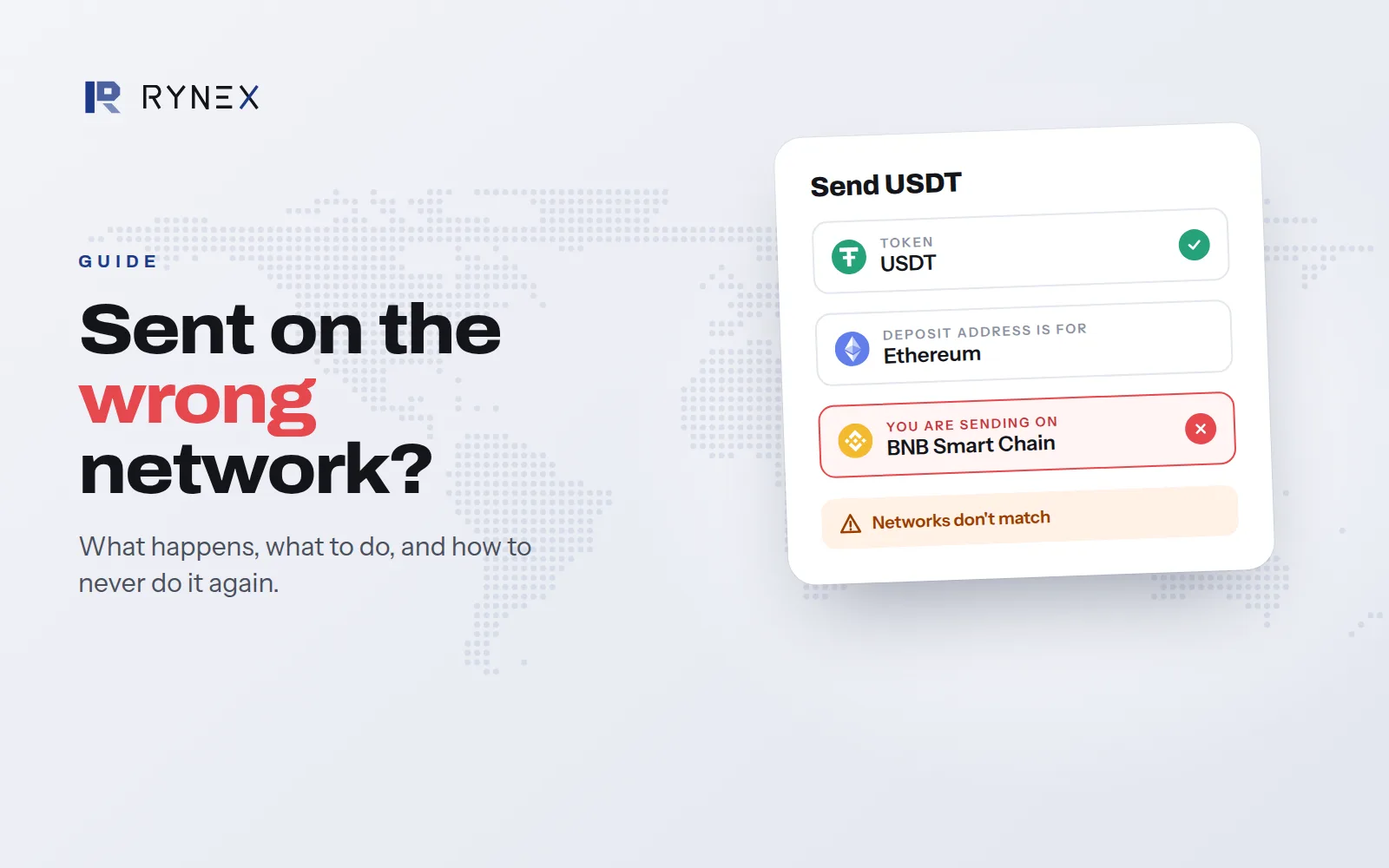
There is no bank to call. A stablecoin sent to the wrong address, or on the wrong network, is usually gone. The same coin exists on many networks, and each transfer has to stay on one of them from start to finish. Check the address and the network every time.
You don't earn the interest
The reserves behind a dollar stablecoin earn interest, mostly from government bonds. That interest goes to the issuer, not to you. Holding a stablecoin protects you from crypto's price swings. It does not protect you from inflation.
The rules are catching up
For years stablecoins sat in a grey area. That is changing:
- In the European Union, the MiCA regulation has applied to stablecoins since 30 June 2024. Issuers need a licence and must hold reserves to set standards.
- In the United States, the GENIUS Act, signed in July 2025, set the first federal rules for dollar stablecoins: full reserves in cash and short-term government debt, monthly public reports on what those reserves are, and supervision of the companies that issue them.
Regulation does not make a coin risk-free. It does make it clearer what an issuer has promised and who checks that the promise is kept.
How to use stablecoins sensibly
- Prefer the large, reserve-backed coins. They have the deepest markets and the longest record of paying out.
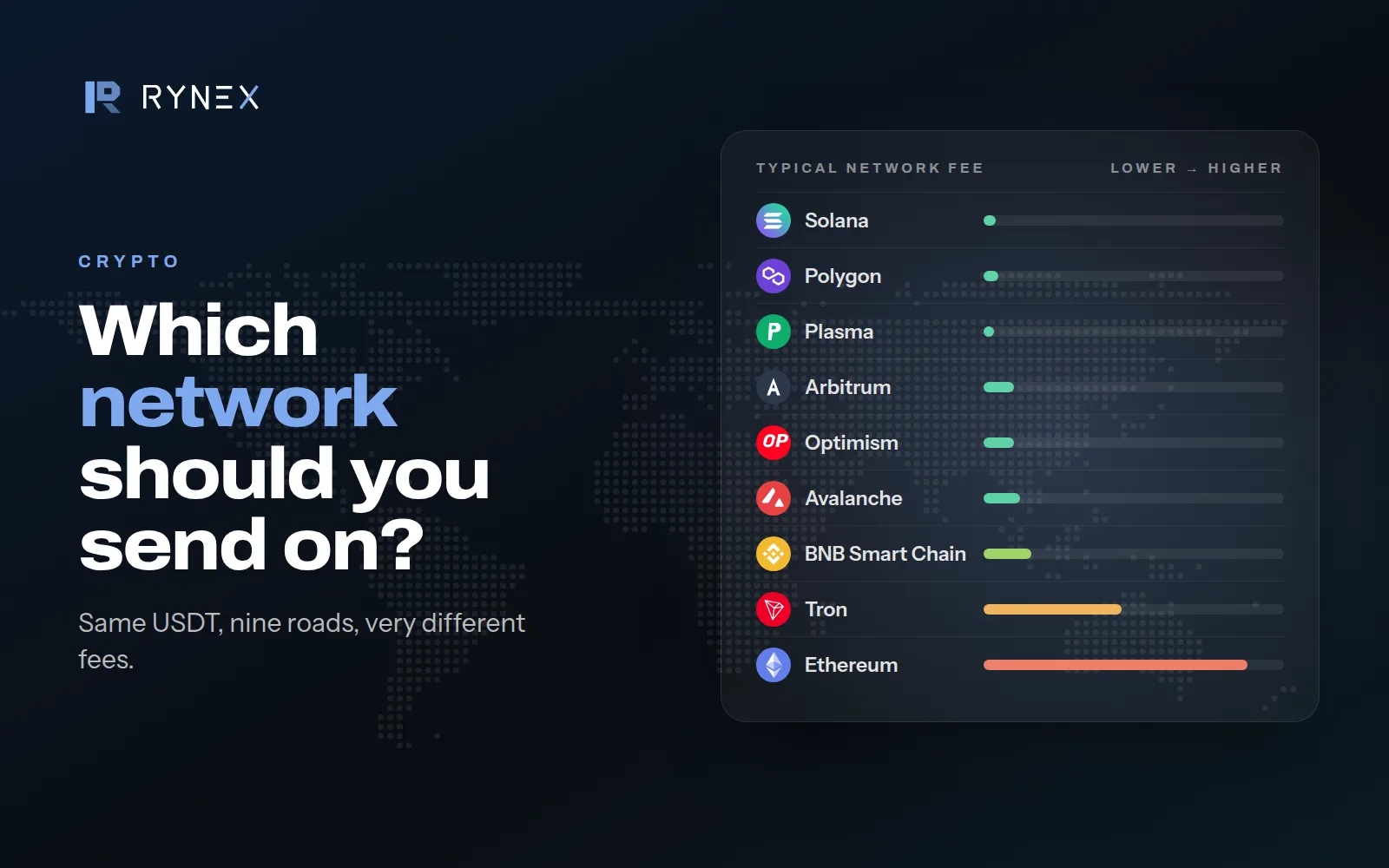
- Learn the networks. USDT on Tron and USDT on Ethereum are the same coin on different roads. The sender and the receiver must use the same one.
- Send a small test first when you use a new address.
- Keep what you can't afford to lose somewhere you understand. A stablecoin is a tool for moving and holding dollars, not a savings account.
- Watch the fees. Network fees vary a lot between networks, and exchanges add their own fee when you withdraw.
Where Rynex fits
Rynex turns USDT into a virtual Visa card you can spend anywhere Visa is accepted, online or by tapping your phone through Apple Pay or Google Pay. We accept USDT on nine networks, and the deposit screen shows exactly how much must arrive before you send anything.
New to USDT in particular? Read what USDT is, and why fund a card with it. Ready to try it? Here is how to get a virtual Visa card with USDT, and every fee is on the pricing page.
This article explains how stablecoins work. It is not financial advice.